
Last Updated: May 22, 2026 · 8 min read
How to Choose a Ganesh Murti for Home Mandir — Size, Pose & Marble Guide
Choosing a Ganesh murti for your home mandir is one of the most significant devotional decisions you will make — and the right marble Ganesh brings abundance, removes obstacles, and anchors your daily puja.
From trunk direction and size selection to Makrana marble quality and Vastu placement, this guide answers every question buyers ask before commissioning.
Marble Moortis artisans in Jaipur have handcrafted over 10,000 Ganesh murtis since 1967 — here is what they say matters most.
Statistics
Marble Moortis at a Glance
Why the Right Ganesh Murti Matters
Lord Ganesha is the remover of obstacles and the first deity invoked in any sacred ritual. Placing the right Ganesh murti in your home mandir is not merely decoration - it is an act of devotion that shapes the spiritual energy of your household for decades.
When devotees across India and the diaspora contact Marble Moortis about a Ganesh murti, they always ask the same questions: Which pose is correct? Should the trunk face left or right? What size fits my mandir space? Does marble quality really matter?
After crafting over 10,000 marble Ganesh murtis since 1967, our artisans in Chandpole Bazar, Jaipur have clear answers to all of these questions - and this guide shares them in full.
1. Trunk Direction - Left or Right?
The trunk direction is the single most asked-about aspect of a Ganesh murti. Here is what each signifies:
- Left-facing trunk (Vamamukhi): The most common choice for home mandirs. The left trunk curls toward the left side, which Vastu traditions associate with the moon, coolness, and calm abundance. Easier to please, considered auspicious for household prosperity.
- Right-facing trunk (Dakshinamukhi): Considered more powerful and demanding. The right trunk is associated with the sun and fire energy. Recommended primarily for temples with regular pandits performing elaborate daily rituals. Requires strict puja discipline at home.
- Straight trunk (Urdhva Mukhi): Rare in traditional iconography but popular in modern minimalist designs. Associated with spiritual liberation rather than material abundance.
Marble Moortis recommendation: For home mandirs, choose left-facing trunk unless your family tradition or pandit specifies otherwise.
2. Pose Selection - Which Ganesh Pose Is Right for You?
Ganesh murtis come in several classical poses, each with distinct spiritual significance:
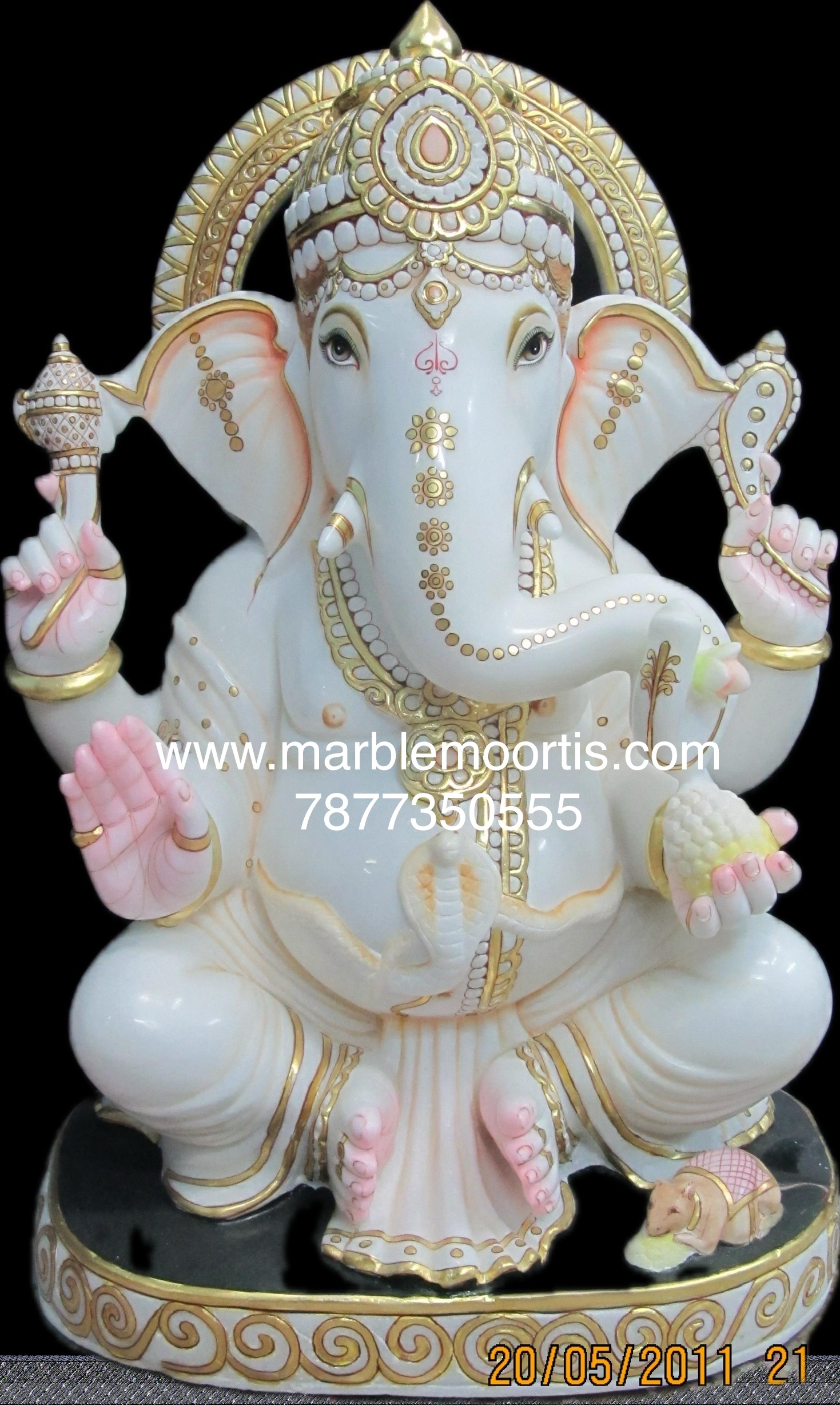
- Seated Ganesh (Lalitasana): The most universally suitable pose for home mandirs. One leg folded, one slightly lowered. Conveys approachability and ease. Ideal for daily puja by families.
- Standing Ganesh (Sthanak Murti): Conveys active blessing and readiness to remove obstacles. Popular for entrances and new construction sites. Works well in taller niches or on the floor of large temples.
- Dancing Ganesh (Nritya Ganapati): Joyful, celebratory form. Excellent for creative spaces, music rooms, and as an artistic statement in living rooms with a dedicated niche.
- Ganesh with Lakshmi (Ganesh-Lakshmi pair): Commissioned frequently by business owners. Ganesh on the left, Lakshmi on the right - combined blessings of opportunity and wealth.
3. What Size Ganesh Murti Should You Order?
Size is determined by three factors: your mandir space, ceiling height, and where the murti will be placed within the niche.
Size by Room Type
- Compact home puja corner or shelf: 6 inches to 12 inches tall. Suitable for apartments and small prayer spaces. Still beautifully detailed in Makrana marble at this scale.
- Standard home mandir cabinet: 12 to 18 inches. The most popular size for family mandirs. Allows for full iconographic detail - modak, mouse, weapons, and ornaments all visible.
- Dedicated mandir room: 18 to 36 inches. Commanding presence without requiring the elaborate puja protocol of a life-size idol. Floor or raised-platform installation.
- Temple or community hall: 2 feet to 6 feet. Requires structural consideration for the base (marble pedestal or concrete plinth). Our artisans can provide installation guidance.
Height of the Eye Line Rule
Vastu and temple tradition both recommend that the eyes of a seated Ganesh murti should be at or near the eye level of a seated adult devotee during puja. If you kneel on a cushion, the murti eyes should meet yours naturally when placed on a raised mandir shelf.
For standing Ganesh murtis positioned on the floor, the ideal eye height is 4 to 4.5 feet from floor level.
4. Makrana Marble vs Other Materials - What to Use for Ganesh
Choosing the wrong material is the most common and most regrettable mistake buyers make. Here is a comparison of options:
- Makrana Marble: Quarried in Nagaur district, Rajasthan. Used for the Taj Mahal. Water absorption near zero, holds fine detail for centuries. Spiritually significant as a sattvic material in Hindu tradition. Our recommendation for all home and temple Ganesh murtis.
- Imported White Marble (Italian Carrara, Vietnamese stone): Softer than Makrana, absorbs water, stains over time, chips more easily. Sold by some manufacturers as "white marble" without specifying origin. Ask specifically for Makrana marble certification.
- Resin / Fiberglass composites: Mass-produced, lightweight, and inexpensive. Cannot hold fine carving detail. Surface degrades within 5-10 years, especially in outdoor or humid environments. Not recommended for serious puja.
- Panchaloha brass: Traditional material for South Indian temple murtis. Excellent for small icons (under 6 inches). Not practical for large home mandirs due to cost and maintenance.
5. Surface Finish Options for Marble Ganesh Murtis
The finish affects both appearance and spiritual mood:
- Natural matte polish: The most traditional finish. Shows the natural white of Makrana marble. Suitable for morning and evening puja in natural light. Timeless appearance that does not look outdated.
- High gloss mirror polish: Reflects light dramatically. Creates a jewel-like quality. Popular for festival commissions and spaces with controlled lighting.
- Painted and ornamented: Gold leaf on crown and ornaments, pigment on clothing and eyes. Adds visual richness. Requires occasional touch-up by an artisan, particularly if the murti is outdoors or in high-humidity areas.
- Antique patina finish: Lightly aged surface that evokes the appearance of ancient temple murtis. Popular for meditation rooms and heritage-style interiors.
At Marble Moortis, we offer all four finish types. Our most popular request is natural polish with hand-painted eyes, crown, and modak details - creating a sacred but approachable look.
6. Vastu Placement for Your Ganesh Murti
Where you place your Ganesh murti within the home matters according to Vastu Shastra:
- North-east corner (Ishaan): The ideal placement for all deities including Ganesh. Receives morning sunlight and is associated with spiritual energy.
- East-facing: Highly auspicious. Allows the murti to face east (sunrise) and devotees to face east during puja.
- Entrance and foyer: Ganesh at the entrance is a strong protective tradition. Place above or beside the main door, not on the floor. Eye level or slightly above is correct.
- South direction: Traditionally avoided for placing deities - associated with Yama (the god of death).
- Kitchen and bedroom: Generally not recommended for main deity installations, though a small Ganesh in the kitchen corner is a common family tradition.
7. How to Commission a Custom Ganesh Murti from Marble Moortis
The commissioning process at our Jaipur workshop takes 4 to 12 weeks depending on size and complexity:
- Initial consultation (free): WhatsApp or video call with our design team. Share your mandir dimensions, preferred pose, trunk direction, and any reference images.
- Design and quote: We sketch your murti to scale and provide a detailed price quote within 24 hours. No charge for the sketch if you proceed.
- Marble block selection: We source the best available Makrana block for your murti size. Photos sent for approval before carving begins.
- Carving stages: Rough shape → structural detail → surface detail → finishing. Progress photos at each stage upon request.
- Finishing and quality check: Final polish, paint details (if any), and inspection by senior artisan. Certificate of authenticity provided.
- Packaging and shipping: Foam-padded, wooden-crated, fully insured. Delivered to your door in India or internationally.
Frequently Asked Questions
How much does a marble Ganesh murti cost?
Prices at Marble Moortis start at approximately ₹3,500 for a 6-inch seated Ganesh and range to ₹2,50,000 or more for a 4-foot temple-scale murti. International shipping adds ₹8,000-₹40,000 depending on destination. We provide all-inclusive quotes with no hidden charges.
Can I send my own design for a custom Ganesh murti?
Yes. We regularly work from customer sketches, photographs of existing murtis, or traditional iconographic prints. Send your reference to our WhatsApp number and we will assess feasibility and cost within 24 hours.
How long does delivery take?
Standard orders: 4-6 weeks within India, 6-10 weeks internationally. Large temple commissions: 10-14 weeks. Rush orders are possible at an additional charge - discuss at consultation.
Do you provide a guarantee?
All Marble Moortis murtis carry a 5-year craftsmanship guarantee covering carving defects and natural marble cracking. Shipping damage is covered by full transit insurance on all international orders.
Browse our complete Ganesh marble murti collection — sitting, standing, and dancing poses in all sizes.
Pair your Ganesh with a Lakshmi marble idol for complete abundance in your home mandir.
Conclusion
Choosing a Ganesh murti for your home mandir deserves careful thought - trunk direction, pose, size, marble quality, finish, and Vastu placement all contribute to the devotional experience your family will enjoy for generations.
The most important decision is material: insist on authentic Makrana marble from a verifiable Jaipur manufacturer. Everything else can be customized to your tradition, space, and aesthetic preferences.
Marble Moortis artisans are available for free consultation seven days a week. WhatsApp us with your mandir dimensions and we will recommend the exact size, pose, and finish that works best for your space.